


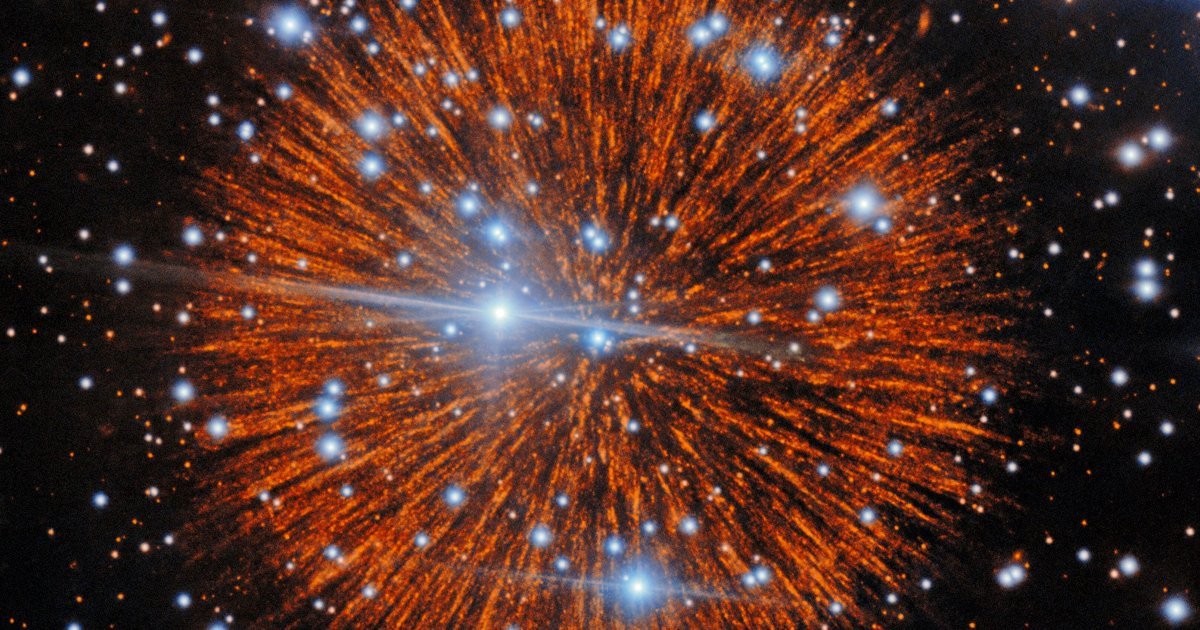
In 1181 — during the early years of the samurai who would dominate Japan’s feudal period — astronomers there witnessed a spectacular sight in the night sky. They observed remnants of a star that had survived its own explosion, a bright object in the Cassiopeia constellation visible for at least 185 days.
The supernova, independently documented almost a millennium ago by Japanese, Chinese, and Arabic astronomers, is just one out of five events like it recorded before the invention of the telescope several hundred years later.
Now, thanks to breathtaking new images taken by NOIRLab’s Gemini North telescope — made up of two powerful telescopes in Hawaii and Chile — we get to see the debris field, dubbed Pa 30, in unprecedented detail.
The astronomers were also left with a puzzle: the explosion perfectly preserved the surviving progenitor star at the dead center of perfectly uniform knots of ionized gases, bizarre conditions suggesting a perfectly symmetric, yet chaotically violent, event.
