


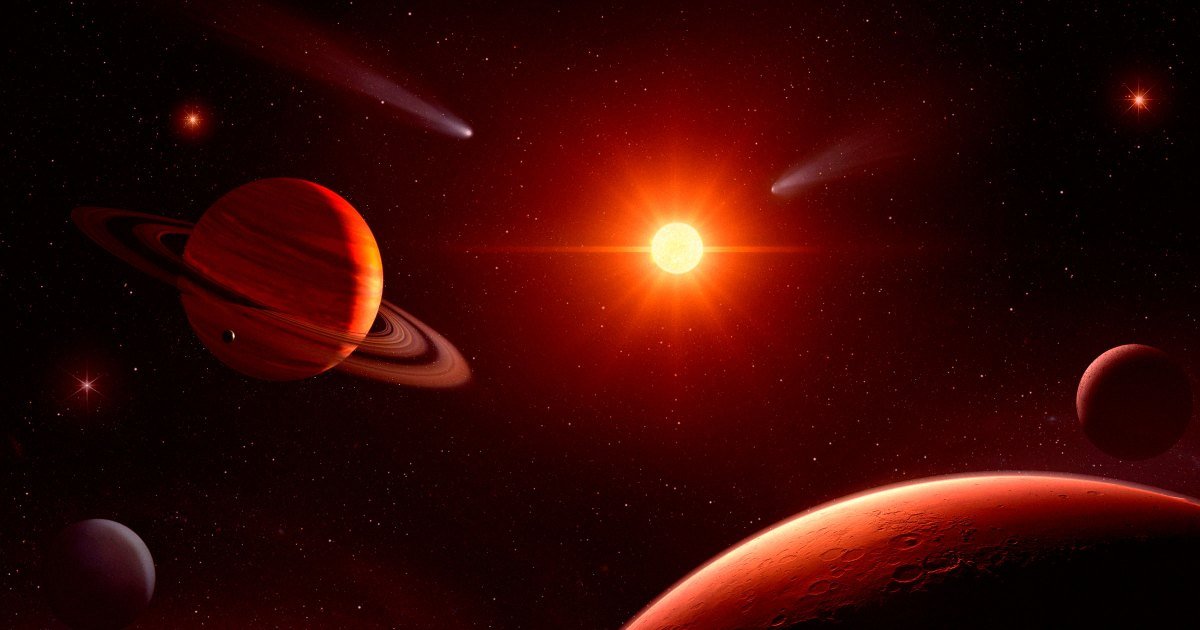
Scientists believe that the massive ball of hydrogen and helium at the center of our star system was born some 4.5 billion years ago, allowing life on Earth to flourish billions of years later.
And while conventional models suggest the Sun will meet its final demise when it grows into a red giant and collapses to form a white dwarf some six billion years from now, the fate of its surviving planets remains a subject of debate.
Researchers had previously suggested that any planets in the star’s vicinity, including the Earth, will be swallowed up, while the more distant gas giants remain largely intact long after the Sun’s demise. But a new paper published in The Astrophysical Journal Letters paints an even more dire picture.
The team led by California Institute of Technology astrophysicist Konstantin Batygin argues that even these distant objects may not make it across the one billion-year mark after the Sun collapses into a white dwarf, an extremely dense husk of a stellar core.
