


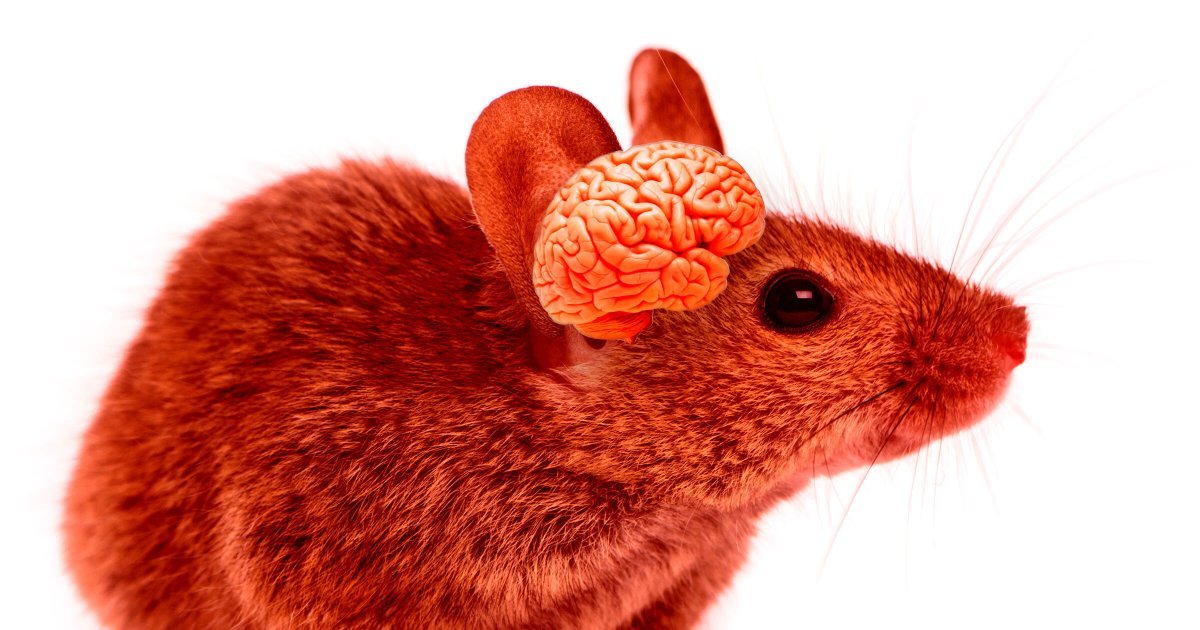
Scientists have created mice with brains that have millions of functioning human neurons fused into them. This groundbreaking feat could provide a new avenue for understanding and treating neurocognitive disorders, though the Frankenstein-esque nature of the work will surely raise ethical questions.
In a new study published in the journal Nature, the Stanford University scientists report how they used genetic engineering to deliberately create mice with parts of their brain missing — namely a key region called the cortex. By also stripping the mice of the ability to replenish these cortex neurons, this carved out a space that they could implant human brain cells.
Not only did the implanted human neurons take hold, but they multiplied dramatically, blooming from just a few hundred neurons to several million, and successfully connecting with the mouse brain. The mice themselves, meanwhile, largely behaved as normal, despite nearly half their brains now being human by volume.
“For the past two decades, there’s been a quest to try to build models of the human brain outside of the human body,” senior author Sergiu Pașca, a Stanford professor of psychiatry who worked on the mice, told NPR. “This is not going to replace all the models we had before, but it’s going to provide us access to other aspects of human brain function that would be very difficult to study otherwise.”
