


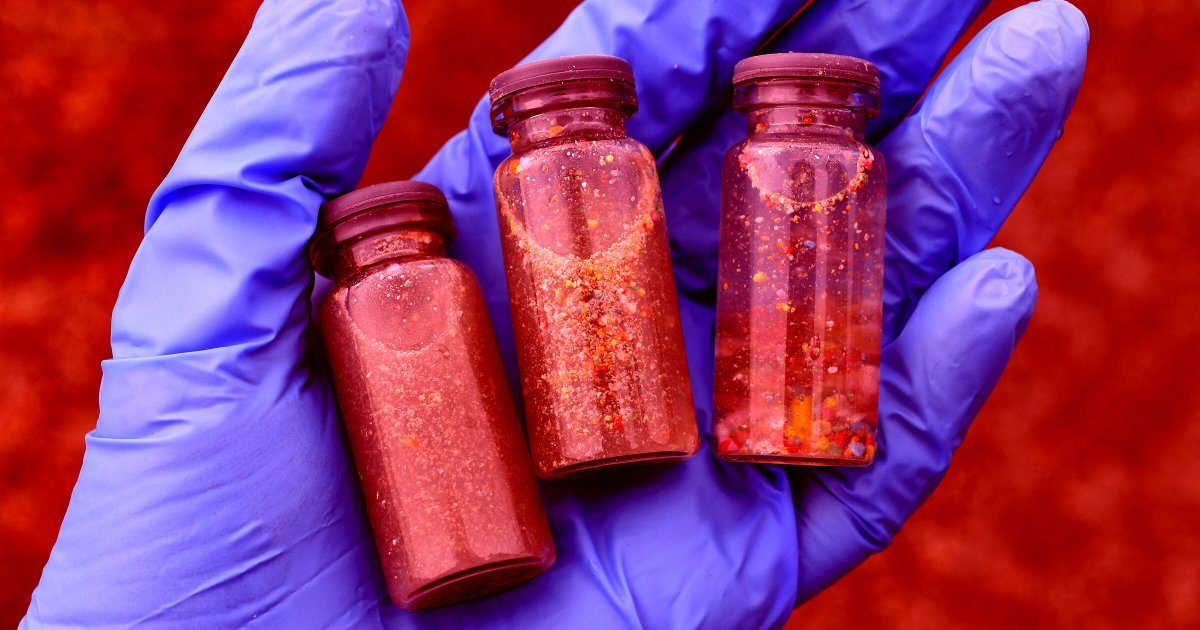
A new piece of research is pushing back on the long-held belief that plastic is a harmless and chemically inert material.
The new study, published in the journal Nature, took a look at the way micro and nanoplastics interact with water-rich environments such as the human body. It found that typical consumer-grade microplastics exhibit “intrinsic physicochemical activity” there, indicating that the tiny chunks of plastic do indeed react chemically inside our bodies.
“As plastic fragments into smaller and smaller particles, its surface area increases enormously,” Columbia professor of chemistry and biomedical engineering and study co-author Wei Min said in a press release. “Then microplastics change the water that surrounds them, generating high-energy, reactive radicals… that very likely contribute to biological damage that we see in animals and potentially in humans as a result of microplastic exposure.”
Min was previously part of another alarming study, which found that the average liter of bottled water contains upward of 240,000 tiny microplastics, a much higher count than previously known. Combined with the new research, it looks like those untold thousands of plastic bits are capable of causing much more chemical harm than scientists had given them credit for.
