


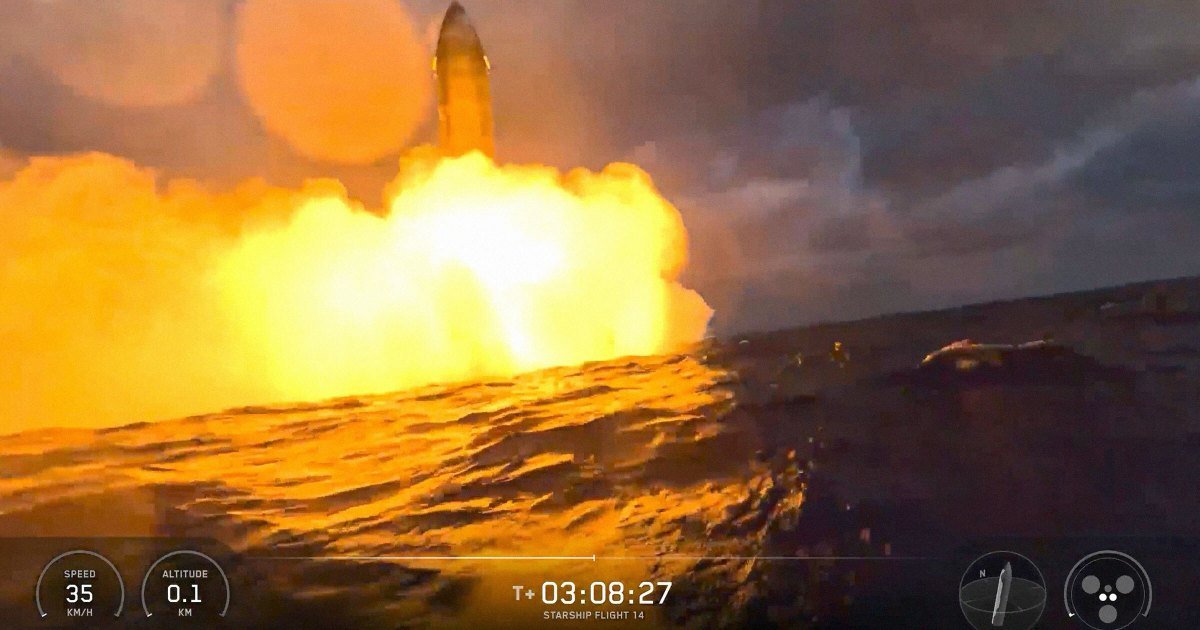
On its 14th flight test Monday, SpaceX’s Starship successfully flew into orbit for the first time, marking a huge milestone for the Elon Musk owned company.
But it didn’t stay up there long. Originally scheduled to fly around the planet six times in a mission lasting a total of ten hours, the rocket instead returned to Earth just three hours into its orbital adventure because of an engine failure. Belly-flopping on its way down, the spaceship righted itself before making a less-than-soft landing in the Pacific, exploding in a fireball moments after touchdown.
While the causes of this propulsion malfunction aren’t clear yet, experts fear that it may portend a fundamental issue with the rocket’s design, which could set back NASA’s 2028 mission, Artemis IV, in its efforts to land humans on the Moon for the first time in over half a century using the spacecraft.
The launch from SpaceX’s Starbase facility in Texas on Monday achieved most of the rocket company’s objectives, including a successful first foray into orbit. While up there, the spacecraft’s upper stage deployed a payload of 26 functioning next-gen Starlink satellites (previous tests used dummies), while its lower stage booster made a controlled splashdown in the Gulf of Mexico.
