


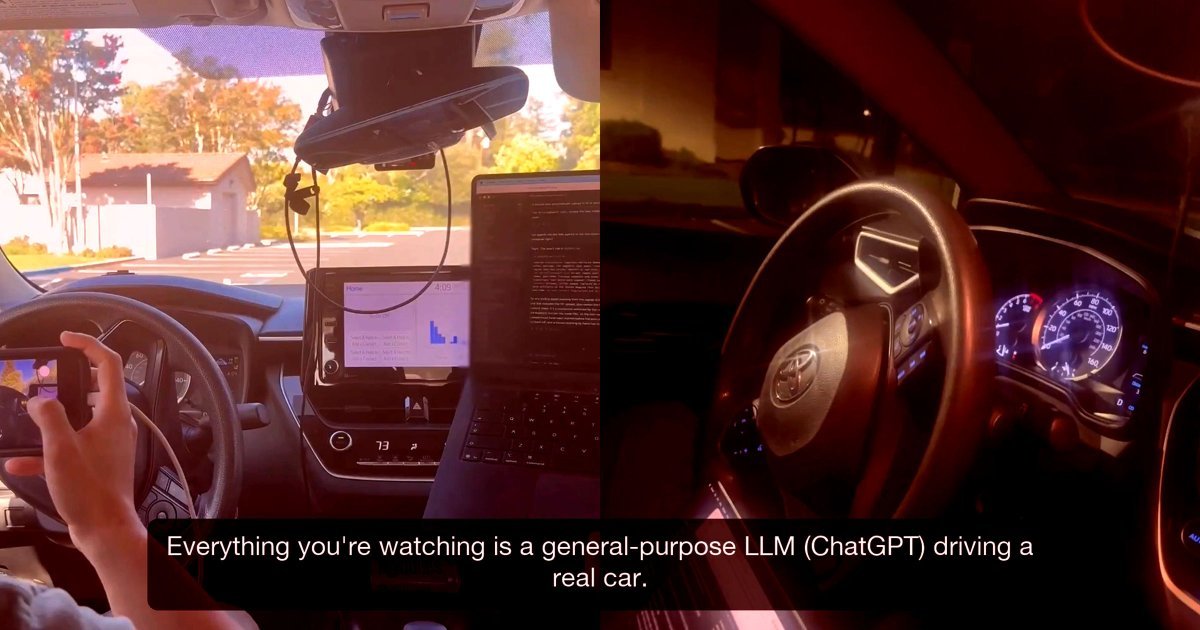
Despite many years of development and enormously complex AI systems that took monstrous amounts of money to train, self-driving cars are still finding themselves stumped by relatively simple obstacles.
Seriously. They unexpectedly stop in the middle of highways, smash through traffic barriers, get bamboozled by construction blockades, and plow into floodwaters.
For those placing bets, it appears that even a cutting-edge AI model won’t fare any better. For a new project, three computer scientists loaded frontier AI models, including OpenAI’s GPT-6 Astra, xAI’s Grok 4.6, and Anthropic’s Claude Fable 5.1, into the brains of a Toyota Corolla to see if they could complete a lap of a course set up in a parking lot.
The setup of the project, dubbed DrivingBench, was simple. An internet-connected laptop communicated with a “comma four” device, which was hooked up to the Toyota’s control systems. The LLMs sent commands to the laptop based on GPS telemetry and other car status indicators, like steering wheel and tire angle, that it received from the comma four.
