


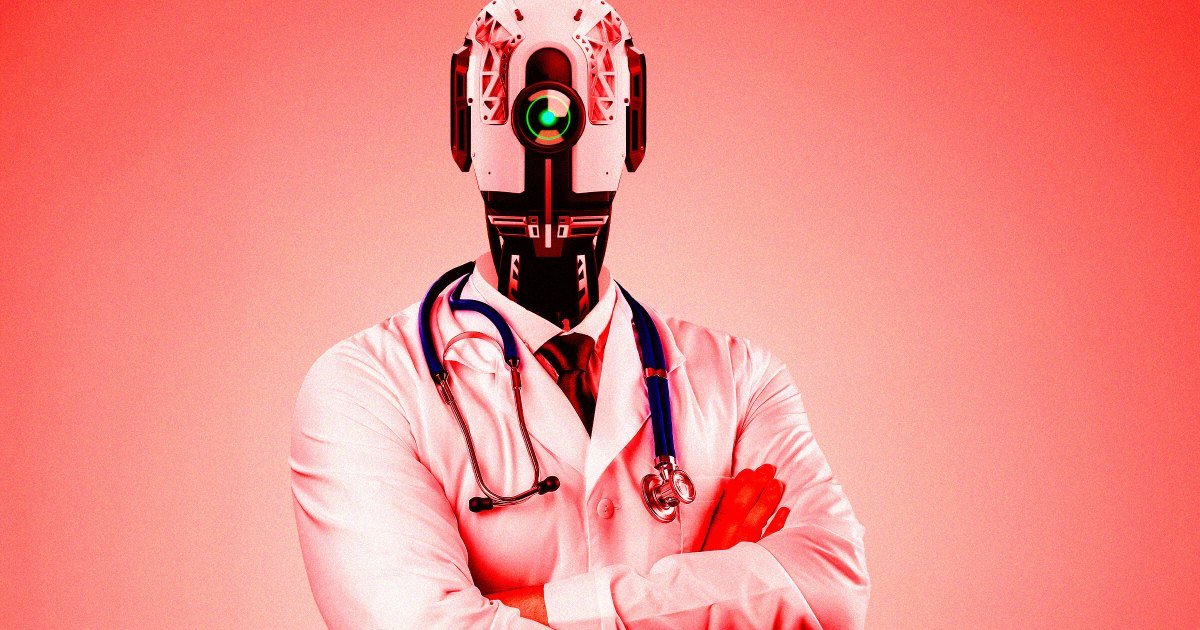
A new paper published in the Journal of the American Medical Association this month concluded, after surveying hundreds of studies on AI in medicine, that not only is AI already an indispensable tool that supports doctors, but that it’s in many ways surpassing them, and will soon be able to care patients on its own better than a human physician could.
“In cognitive medical functions, AI-alone medical care is likely to be better than physician-only or physician-AI hybrid care,” the authors, the widely renowned bioethicist Ezekiel Emanuel and venture capitalist Vinod Khosla, flatly declare.
But many physicians aren’t having it, Wired reports. One of the paper’s chief critics is the CEO of the American Medical Association himself, John Whyte. According to Whyte, some of the studies it surveyed are simulations, instead of blinded experiments, the gold standard of medical studies. And some contradict the author’s conclusions, such as a Nature article from February that found that most patients had a hard time talking to AI chatbots to get the expertise they needed, he argued.
“The AMA does see the potential in these tools, but they have to be utilized in the context of a care plan that’s governed by a physician,” Whyte told Wired.
