


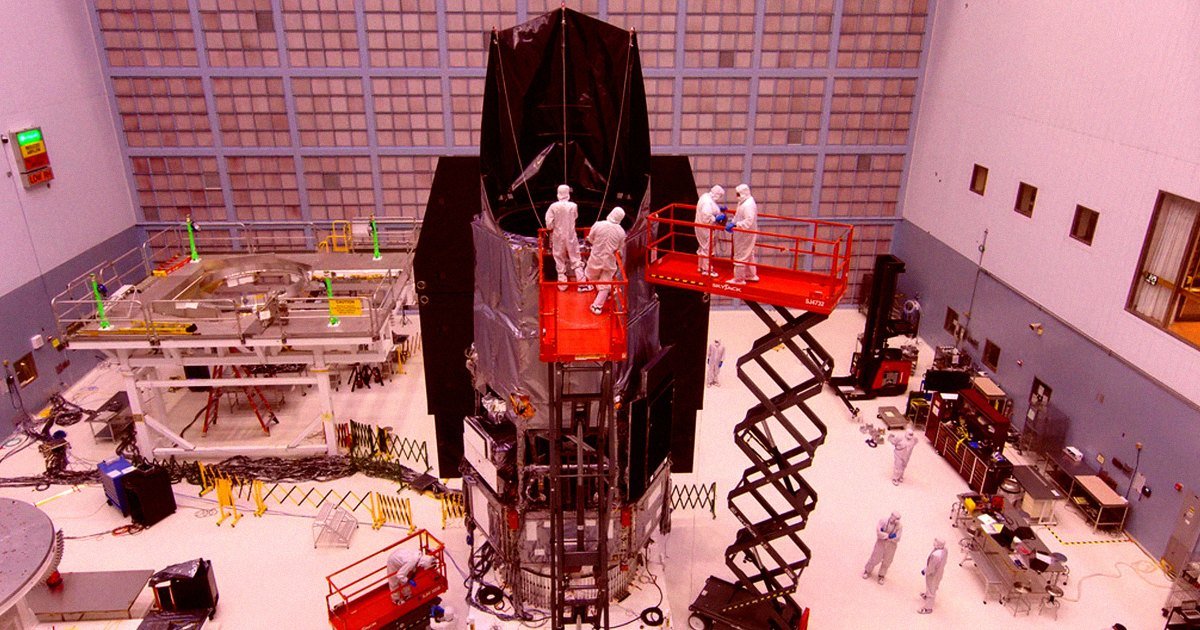
NASA’s Nancy Grace Roman Space Telescope has a lot to live up to. The orbital observatory, a long-awaited successor to the agency’s revolutionary Hubble Space Telescope, is set to launch on Sunday from the Kennedy Space Center on a SpaceX Falcon Heavy rocket.
Scientists have high hopes that the $4.3 billion observatory will deeply further their understanding of the expansion of the universe and identify exoplanets orbiting distant stars.
But the Nancy Grace Roman didn’t start its life as a way to study the cosmos. The National Reconnaissance Office, a government spy agency, offered NASA one of its surveillance satellites it wasn’t using — which was later transformed into the space telescope we know today. The original platform was developed to “spy on America’s adversaries in a post-9/11 world,” as Scientific American put it, but the program collapsed before it could be launched into space.
“The National Reconnaissance Office reached out to NASA,” Duke University cosmologist Daniel Scolnic told NPR, “saying, ‘We have this amazing satellite sitting in a hangar that we’re not using. And what what do you guys think about instead of pointing downwards, we point upwards, and you guys use it?’”
