


Electric vehicles offer plenty of benefits. There’s the instant torque, savings on fuel — and, of course, they’re much kinder to mother Earth.
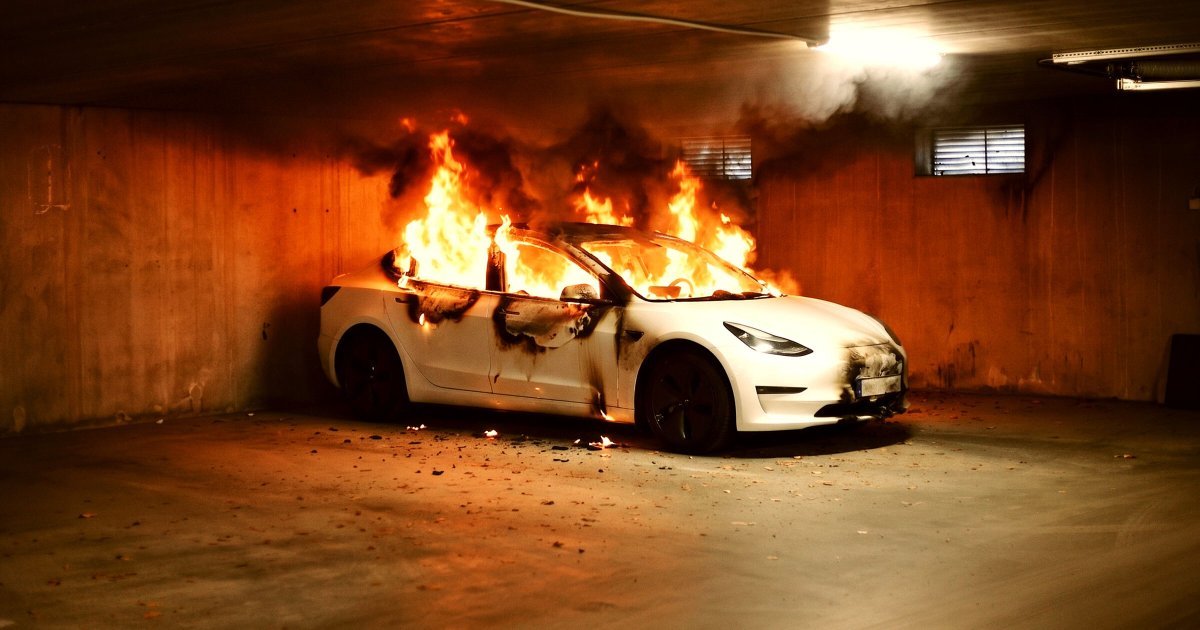
Yet compared to vehicles powered by internal combustion engines, EVs come with a key disadvantage drivers hope they never have to experience: they’re much more dangerous when they catch on fire. (An important caveat, though, is that they catch on fire less often than gas-powered vehicles.)
When they go up in flames, the lithium-ion batteries in EVs are much more difficult for emergency responders to extinguish than standard combustion engines. That’s thanks to a phenomenon known as thermal runaway, basically an accelerating chain reaction fueled by the chemicals found in their cells.
As EVs have exploded in popularity over the last decade, fire fighters have tried all sorts of tactics to control thermal runaway in lithium-ion cells, from hulking submersion containers to chemical mixtures in water to massive wet blankets.
