


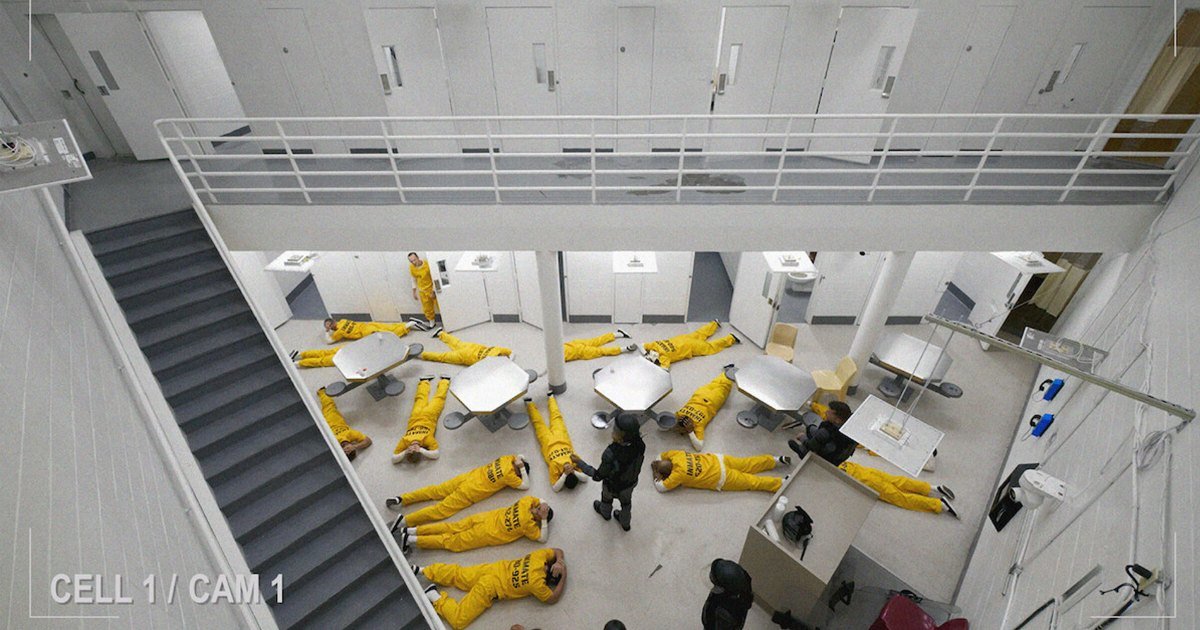
Netflix has recreated one of the most notorious and horrific social experiments in history: the Stanford prison experiment.
The 1971 study has left an indelible legacy in psychology for perhaps all the wrong reasons. In it, Stanford University psychologist Philip Zimbardo had 24 male college students randomly assigned to play guards or inmates in a mock prison to see how power structures could affect the behavior of ordinary people.
It was intended to last two weeks, but was shut down after just six days. From the very start, the students assigned as guards went on cruel power trips and repeatedly humiliated — if not psychologically tortured — the inmates, to the point that some of the prisoners suffered nervous breakdowns. The most infamous images show inmates forced to wear bags over their heads.
Needless to say, the Stanford experiment continues to be controversial for its dubious ethics and the equally dubious rigor of its methodology. Debates still rage over what conclusions, if any, to draw from such a deeply flawed but undeniably compelling study.
