


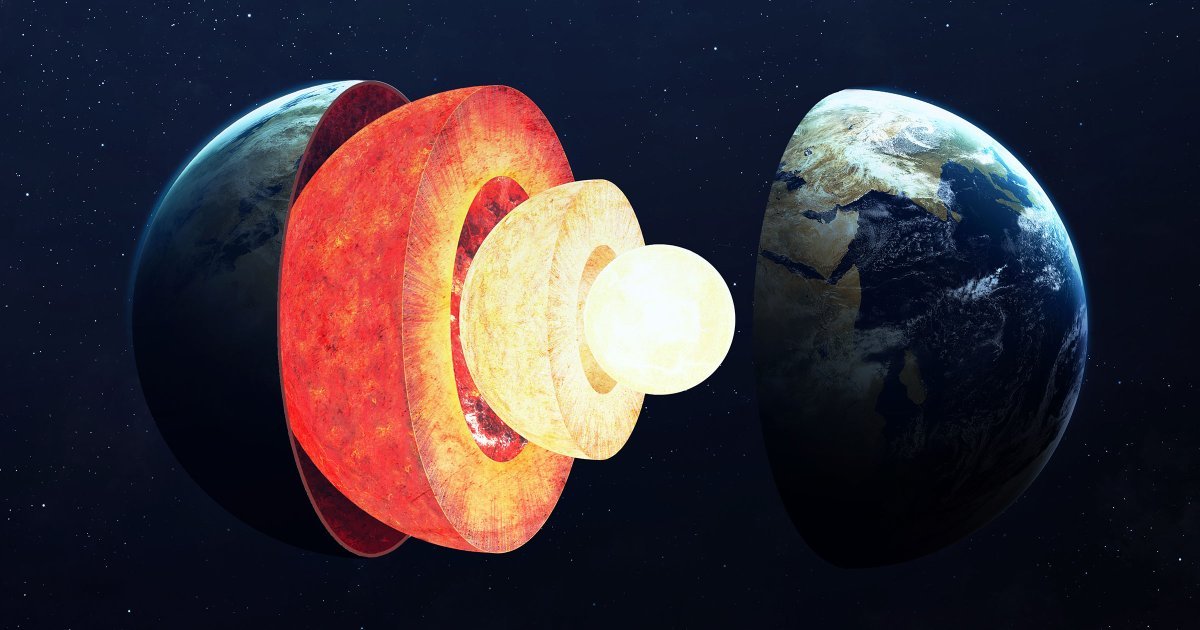
Drilling thousands of miles into the Earth to study our planet’s inner layers — its thin crust, rigid mantle, liquid outer core, and solid inner core — simply isn’t feasible given technological limitations.
Instead, geologists typically use clever tricks to explore our planet’s interior, like probing seismic activity triggered by the dynamics of these shifting layers to plumb their mysteries.
And much like these layers, that picture continues to evolve. As detailed in a new study published in the Journal of Geophysical Research: Solid Earth, researchers at the Chinese Academy of Sciences analyzed data from over two million earthquakes across the planet that took place between 1990 and 2024, using a machine learning algorithm to identify structures lurking several thousand miles below the surface.
They identified almost 175,000 “PKP precursors,” mysterious seismic signals that arrive at earthquake detectors before the main event, which can allow scientists to map the Earth’s innermost structures. More specifically, scientists believe the precursors are triggered by “small heterogeneities” just above the region where the Earth’s solid mantle meets its liquid iron core, roughly 1,800 miles below the surface.
