


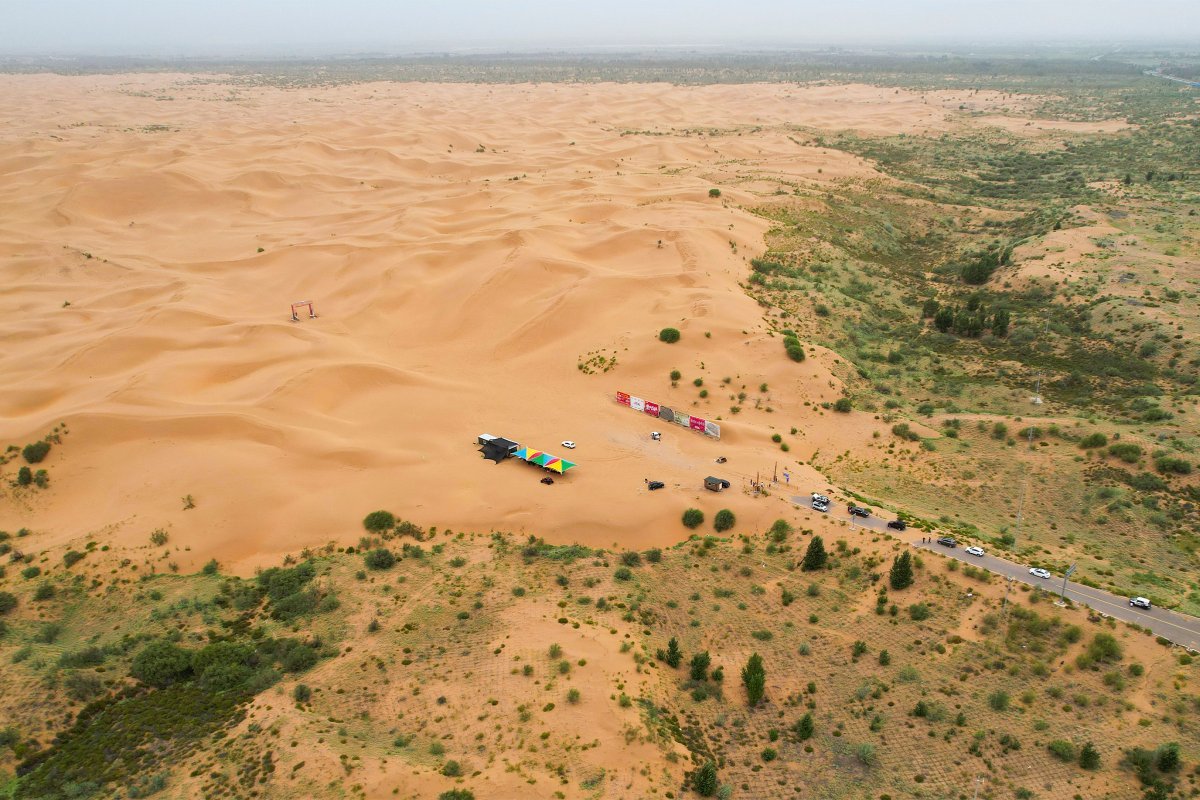
Over the past five decades, China has planted 66 billion trees in a massive wall that spans the Gobi and Taklamakan deserts. This reforestation effort intended to stop the deserts’ spread is working — but, it turns out, with a surprising twist.
In a new study published in the journal Geophysical Research Letters, researchers found that the trees planted in the so-called “Great Green Wall” appear to grow faster than trees in natural forests, possibly because they respond to the rising CO2 levels in our atmosphere better.
Still, it’s mysterious. Study lead author Yuhang Luo, a landscape ecologist at Peking University in Shenzhen, told Live Science that it’s unclear how the artificial forests different from the natural ones, raising questions about their effectiveness at sucking up carbon.
The Great Green Wall project began in 1978 and is expected to be completed by 2050. The original intent was to slow the desertification of the country’s grasslands, of which the Gobi devours over a thousand square miles every year. In its early stages, the initiative struggled to get off the ground, as some of the trees chosen for their quick growth turned out to be poorly suited for the environment and died off.
