


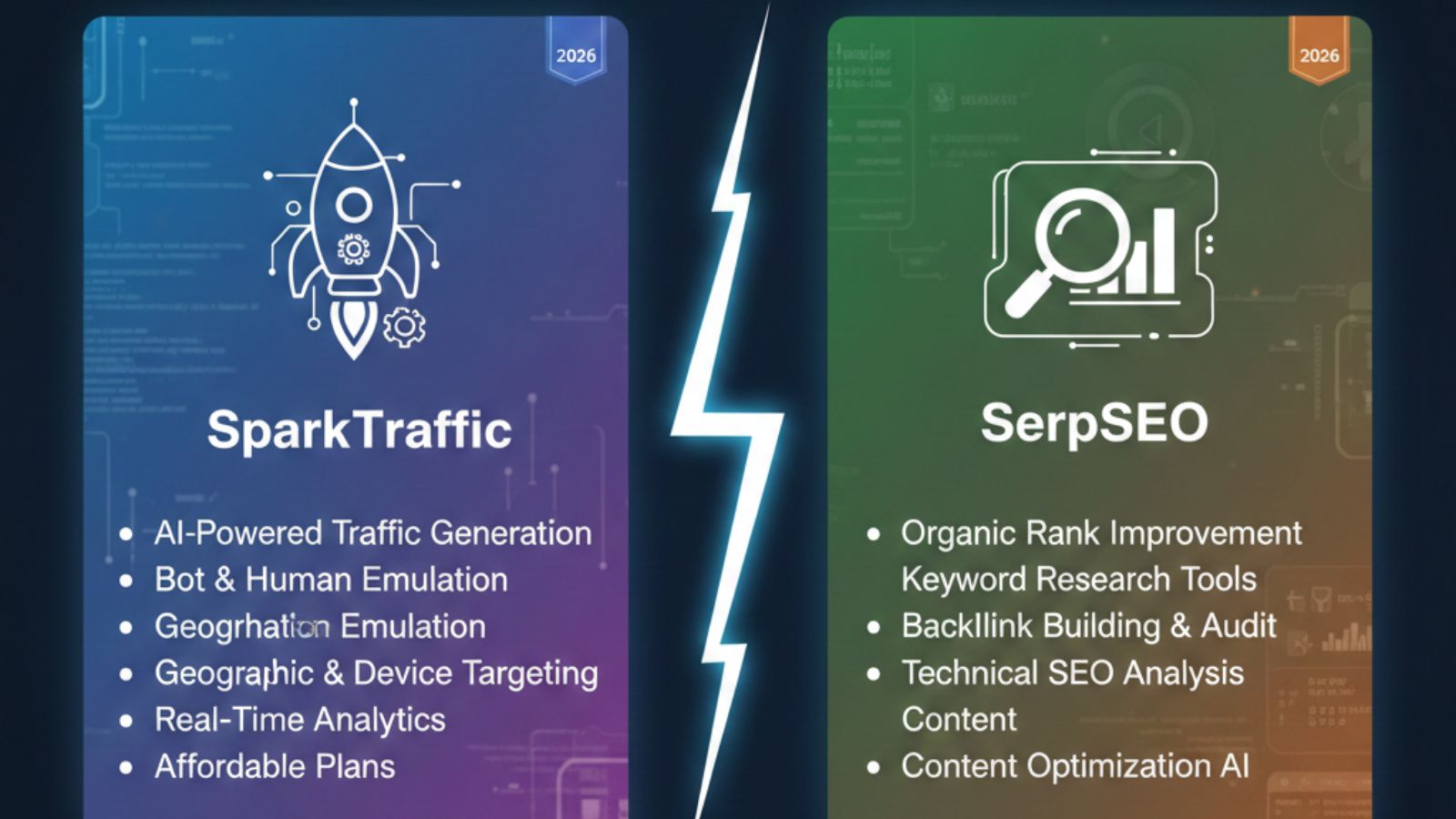
Understanding the Basics of SparkTraffic vs SerpSEO
The debate between SparkTraffic vs SerpSEO has become increasingly relevant for website owners seeking to boost their online presence. Both platforms offer traffic generation services, but they approach the challenge from fundamentally different angles. Understanding these differences is crucial before investing in either solution.
SparkTraffic focuses primarily on generating raw website traffic through automated visits, aiming to increase visitor numbers and potentially improve engagement metrics. SerpSEO, meanwhile, concentrates on search engine positioning and organic traffic growth through strategic SEO manipulation and ranking improvements. When comparing SparkTraffic vs SerpSEO, it’s essential to recognize that one prioritizes quantity while the other emphasizes strategic positioning in search results.
Both services operate in the gray area of digital marketing, promising results that might be difficult to achieve through traditional SEO methods. However, the mechanisms, risks, and outcomes differ significantly, making the choice between SparkTraffic vs SerpSEO dependent on your specific goals, risk tolerance, and long-term website strategy.
Feature Comparison of SparkTraffic vs SerpSEO
When evaluating SparkTraffic vs SerpSEO features, several key differences emerge. SparkTraffic provides broader traffic volume with less specificity about traffic source intent, while SerpSEO delivers targeted search-based traffic focused on specific keywords and rankings.
Traffic Source: SparkTraffic generates direct, referral, and simulated search traffic from various sources. SerpSEO exclusively focuses on search engine traffic, specifically targeting Google and other major search platforms.
Customization: SparkTraffic allows geographic targeting, device selection, and visit duration control. SerpSEO enables keyword targeting, SERP position selection, and engagement behavior customization.
Analytics Integration: SparkTraffic traffic typically appears in Google Analytics and other tracking tools, though discerning users can identify unusual patterns. SerpSEO traffic similarly registers but focuses on metrics search engines monitor for ranking purposes.
Scalability: SparkTraffic scales easily by adjusting daily visitor targets. SerpSEO scales by adding more keywords or increasing click volumes per keyword.
Speed of Results: SparkTraffic delivers immediate traffic increases visible within hours. SerpSEO results manifest gradually as ranking improvements over weeks or months.
Pricing Differences
Pricing represents a significant consideration in the SparkTraffic vs SerpSEO decision. SparkTraffic typically operates on a tiered subscription model starting around $29-$49 monthly for basic packages delivering several thousand visits, scaling up to $200+ monthly for premium packages with hundreds of thousands of visits, geographic diversity, and priority support.
SerpSEO pricing generally runs higher due to the targeted nature of services. Basic keyword packages might start around $50-$100 monthly for a few keywords with moderate search volume, while comprehensive campaigns targeting competitive keywords can exceed $300-$500 monthly. The cost reflects the complexity of simulating genuine search behavior and the potential ranking impact.
Both platforms often offer trial periods or money-back guarantees, though terms vary. When comparing SparkTraffic vs SerpSEO value, consider not just absolute cost but cost per desired outcome—whether that’s visitor volume or ranking improvement.
Risks and Considerations
The SparkTraffic vs SerpSEO debate must address serious risks associated with both services. Neither represents legitimate, sustainable SEO practice, and both carry potential penalties.
Search Engine Penalties: Google explicitly prohibits artificial traffic generation and ranking manipulation. If detected, websites risk severe penalties including ranking drops, manual actions, or complete deindexing. SerpSEO poses particularly high risk here since it directly attempts to manipulate ranking signals.
Wasted Investment: Artificial traffic provides no real business value. It won’t generate leads, sales, or genuine engagement. Money spent on either service yields inflated metrics without corresponding revenue growth.
Analytics Contamination: Both services pollute analytics data, making it difficult to understand genuine user behavior, conversion paths, and marketing effectiveness. This hampers informed business decisions.
Reputation Damage: If stakeholders, partners, or customers discover artificial traffic usage, it can severely damage credibility and trust.
Terms of Service Violations: Using these services likely violates Google Analytics, Google Ads, and other platform terms of service, potentially leading to account suspensions.
When SparkTraffic Can Be Useful
Despite risks, specific scenarios exist where SparkTraffic might serve legitimate purposes in the SparkTraffic vs SerpSEO comparison. Load testing represents the most legitimate use case—developers can simulate high traffic volumes to test server capacity, performance optimization, and CDN effectiveness before major launches or traffic spikes.
Demonstration purposes for pitch decks or investor presentations where showing potential traffic handling capabilities matters more than actual visitor quality might justify temporary usage, though ethical considerations remain. Some website owners use SparkTraffic to create initial activity on new sites, believing it helps establish credibility, though this benefit is questionable.
However, these use cases represent exceptions. For most website owners seeking genuine growth, SparkTraffic offers minimal value and substantial risk.
When SerpSEO Is More Suitable
Finding legitimate applications for SerpSEO in the SparkTraffic vs SerpSEO debate proves even more challenging. Some practitioners argue it could supplement genuine SEO efforts for extremely competitive keywords where natural ranking progress stalls, though this remains ethically questionable and risky.
Testing search engine algorithm sensitivity to engagement metrics might interest SEO researchers, though such testing should occur on test domains rather than live business websites. Some use SerpSEO to understand competitor tactics if they suspect artificial ranking manipulation, though fighting manipulation with manipulation rarely ends well.
Realistically, SerpSEO is rarely suitable for legitimate businesses with long-term growth goals. The risk-reward ratio heavily favors avoiding these services entirely.
Community Feedback and Reputation
Digital marketing community sentiment on SparkTraffic vs SerpSEO leans overwhelmingly negative among reputable SEO professionals. Industry leaders consistently warn against artificial traffic services, emphasizing sustainable, white-hat SEO strategies instead.
User reviews present mixed pictures. Some report initial metric improvements that quickly plateau or reverse. Others share penalty stories where websites lost rankings after detection. Positive reviews often come from users focused on vanity metrics rather than business outcomes.
Reputation-wise, neither service enjoys endorsement from respected SEO authorities. Google representatives have explicitly condemned these practices in various forums and official communications.
A Step-by-Step Guide to Making the Right Choice
When deciding on SparkTraffic vs SerpSEO—or whether to use either—follow this systematic approach:
Step 1: Define your actual goals. Are you seeking genuine business growth, or just impressive-looking metrics?
Step 2: Assess risk tolerance. Can your business survive potential search engine penalties?
Step 3: Evaluate alternatives. Have you exhausted legitimate SEO, content marketing, and paid advertising options?
Step 4: Consider long-term implications. Will artificial traffic or rankings serve your business in five years?
Step 5: Consult with ethical SEO professionals who can offer sustainable growth strategies.
Step 6: If still considering these services despite risks, start with minimal investment on non-critical domains to understand potential outcomes.
Step 7: Implement robust tracking to separate artificial metrics from genuine performance indicators.
Conclusion
The SparkTraffic vs SerpSEO comparison ultimately reveals that neither service offers sustainable, risk-free solutions for serious website growth. While SparkTraffic delivers raw traffic volume and SerpSEO targets ranking manipulation, both approaches fundamentally misalign with search engine guidelines and best practices.
For businesses seeking genuine online success, investing in quality content creation, technical SEO optimization, authentic link building, and user experience improvements delivers superior long-term results without penalty risks. The short-term metric boosts these services promise pale compared to the sustainable growth achievable through ethical digital marketing strategies.
If you must explore these options, understand the risks completely, never use them on your primary business website, and view them as temporary experiments rather than core marketing strategies. The future belongs to websites that earn their traffic and rankings through genuine value creation, not artificial manipulation.
