


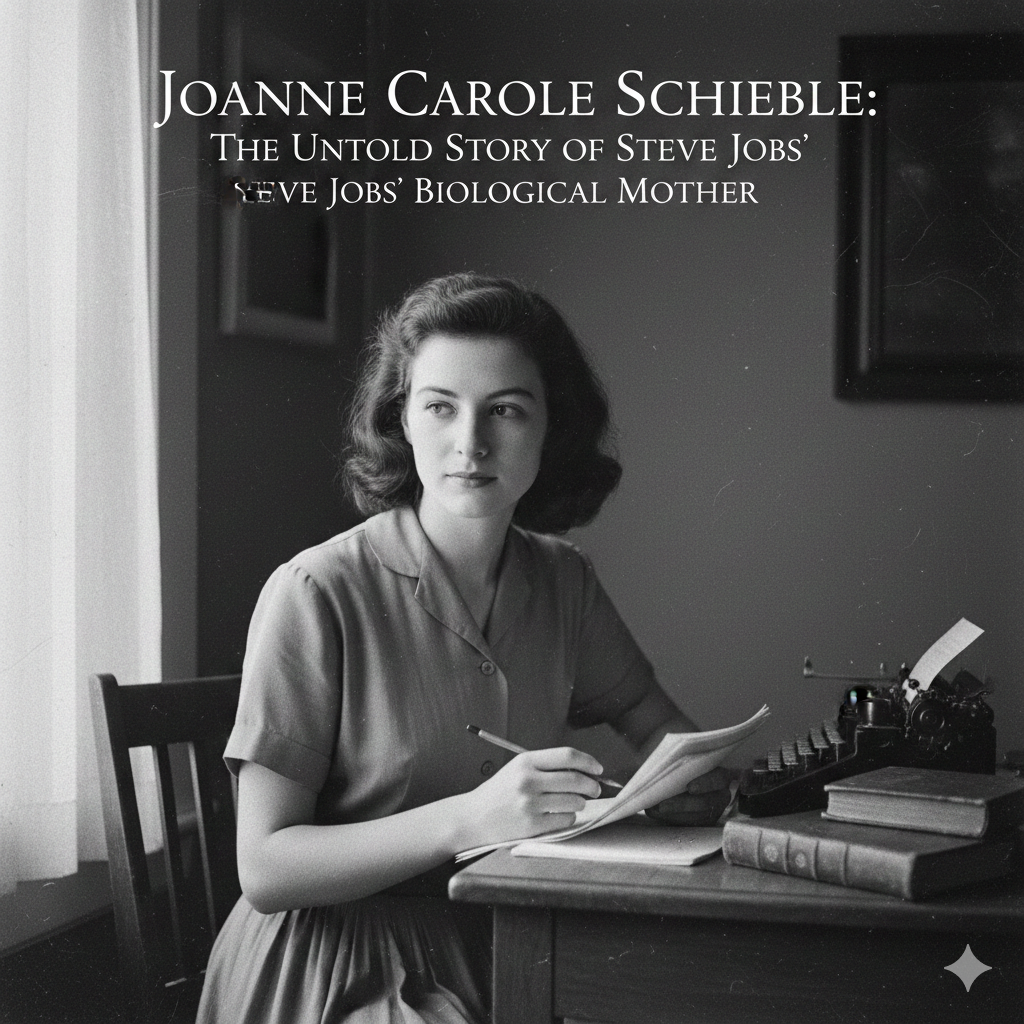
The story of Silicon Valley’s most iconic figure, Steve Jobs, is incomplete without understanding the woman who gave him life: Joanne Carole Schieble. Her remarkable journey through love, loss, and resilience shaped one of history’s most influential figures, yet her own story remains largely untold. This comprehensive look at Joanne Carole Schieble reveals a woman of courage whose decisions would inadvertently change the course of technology forever.
Quick Facts: Joanne Schieble Simpson
Joanne Carole Schieble was born in 1932 in Wisconsin to a traditional German-American family. She later became known as Joanne Simpson after her marriage to George Simpson. A speech therapist by profession, Joanne lived a life marked by difficult choices made during a conservative era when societal norms severely restricted women’s options. She passed away in 2006, having witnessed her son’s transformation into a global icon while maintaining a relationship that evolved from separation to reconciliation.
Relationship with Abdulfattah Jandali
At the University of Wisconsin, Joanne Carole Schieble met Abdulfattah “John” Jandali, a teaching assistant from Syria pursuing his doctorate in political science. Their relationship blossomed despite the cultural and religious differences that would ultimately doom their chance at a conventional future together.
Jandali came from a prominent Syrian family, and both young people were passionate about their studies and shared intellectual interests. Their romance developed during the mid-1950s, a period when interracial and intercultural relationships faced significant social stigma and legal barriers in many parts of America.
Challenges They Faced:
The primary obstacle confronting Joanne and Abdulfattah was Arthur Schieble’s vehement opposition to their relationship. Her father threatened to disown her if she married a Muslim man from Syria, reflecting the prejudices prevalent in 1950s America. This ultimatum placed Joanne in an impossible position, torn between family loyalty and personal happiness.
When Joanne became pregnant in 1954, the situation became critical. Unwed motherhood carried severe social stigma, and her father’s stance remained unchanged. Without family support or the possibility of marriage, Joanne faced limited options in an era before widespread social safety nets or acceptance of single mothers.
The Birth and Adoption of Steve Jobs
Facing societal pressure and family rejection, Joanne Carole Schieble made the heart-wrenching decision to place her baby for adoption. She traveled to San Francisco, California, where she could maintain privacy during her pregnancy, far from the judgmental eyes of her Wisconsin community.
Key Events:
On February 24, 1955, Joanne gave birth to a son she named Steven. She had arranged for the baby to be adopted by a lawyer and his wife, but they withdrew at the last minute, wanting a daughter instead. The adoption agency then turned to Paul and Clara Jobs, a working-class couple from Mountain View, California.
Joanne initially resisted this placement because neither adoptive parent had college degrees. She relented only after Paul and Clara Jobs promised to send the boy to college, ensuring he would receive the educational opportunities she valued. This condition proved prophetic, though Steve Jobs would eventually drop out of Reed College to forge his own path.
The adoption was finalized in 1955, and Joanne returned to Wisconsin to rebuild her life. The decision haunted her for years, though she believed it was the best option available given her circumstances.
Life After Steve Jobs’ Adoption
Following the adoption, Joanne Carole Schieble’s relationship with Abdulfattah Jandali eventually ended, unable to withstand the strain of their circumstances and her father’s continued opposition. However, her life would take a more positive turn after her father’s death in 1955.
Notable Facts:
With her father no longer an obstacle, Joanne reconnected with Abdulfattah Jandali, and they briefly married. However, this marriage was short-lived, ending in divorce. The relationship had been irreparably damaged by the painful circumstances surrounding their son’s birth and adoption.
Joanne worked as a speech therapist, building a respectable career that provided independence and purpose. She demonstrated resilience in rebuilding her life after making one of the most difficult decisions a mother could face.
Marriage to George Simpson and Birth of Mona Simpson
Joanne Carole Schieble found lasting happiness when she married George Simpson, a stable and supportive partner. This marriage brought stability and acceptance that had eluded her during her relationship with Jandali.
Key Highlights:
In 1957, Joanne and George welcomed a daughter, Mona Simpson, who would later become an acclaimed novelist. Unlike her first child, Joanne was able to raise Mona, giving her the maternal experience that circumstances had denied her with Steve Jobs.
Mona Simpson grew up knowing about her older half-brother, though Steve Jobs wouldn’t learn about his biological family until adulthood. The sisters would eventually develop a close relationship, with Mona becoming one of Steve’s most trusted confidants.
Joanne Schieble Simpson’s Legacy
Joanne Carole Schieble’s legacy extends far beyond her famous son. Her story illuminates the limited choices available to women in mid-century America and the personal costs of societal prejudice and rigid family expectations.
Contributions to Steve Jobs’ Story:
While Joanne didn’t raise Steve Jobs, her insistence that his adoptive parents provide him with educational opportunities demonstrated her values and foresight. This condition helped shape the trajectory of one of history’s most innovative minds.
In later years, Joanne and Steve Jobs reconciled and developed a relationship, though it remained complicated by the decades of separation. Steve Jobs spoke about understanding the difficult circumstances she faced and expressed forgiveness for her decision.
Conclusion
Joanne Carole Schieble’s life story represents the untold struggles behind extraordinary legacies. Her courage in facing impossible choices during an unforgiving era, her resilience in rebuilding her life, and her eventual reconciliation with her son reveal a complex woman whose influence rippled through technology history. While Steve Jobs became the public face of innovation, Joanne Carole Schieble’s private decisions and sacrifices formed the human foundation of that remarkable story. Her legacy reminds us that behind every great figure stands a network of people whose quiet strength and difficult choices shape destinies in ways they could never imagine.
