


The Vision Behind a Revolutionary Platform
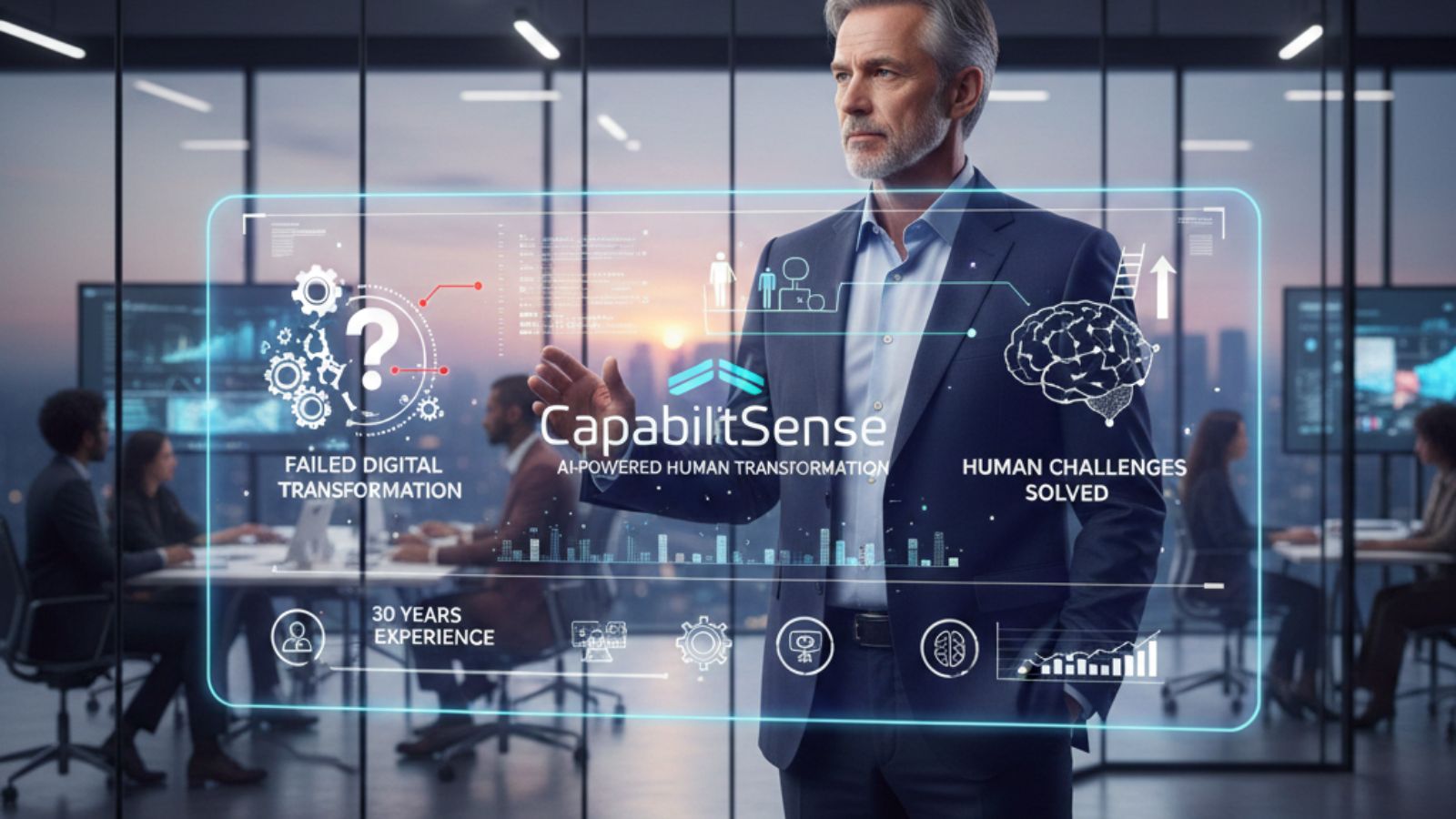
In the fast-evolving world of enterprise technology, one question continues to haunt business leaders: why do so many digital transformations fail despite significant investments in cutting-edge tools and talented teams? Andrei Savine, a veteran with 30 years of experience in technology and enterprise transformation, asked himself this question repeatedly throughout his career. His answer led him to create CapabiliSense, an AI-powered platform designed to address the fundamental human challenges that derail even the most promising transformation initiatives. Understanding why I’m building CapabiliSense reveals not just one entrepreneur’s journey, but a solution to one of business’s most persistent problems.
Three Decades of Witnessing the Same Failures
Andrei Savine’s career spans the full spectrum of technology roles. Starting with basic IT and network administration, he progressed through software development and team building, eventually leading cloud, digital, and data transformations for major organizations including AWS, Airbus, AstraZeneca, Verisure, Decathlon, and European Union agencies. This extensive experience provided him with a unique vantage point to observe patterns that most consultants miss when they parachute into projects for shorter engagements.
Throughout these three decades, Savine noticed a troubling consistency: the same obstacles appeared repeatedly across different industries, company sizes, and transformation types. Surprisingly, these blockers rarely stemmed from inadequate technology or unrealistic goals. Instead, they originated from lack of alignment, poor communication, and broken trust between people. This realization became the cornerstone of why I’m building CapabiliSense—to finally address the root causes rather than symptoms of transformation failure.
The Staggering Cost of Human Disconnect
The statistics are sobering and well-documented across multiple authoritative sources. Between seventy and ninety-five percent of large-scale digital, AI, or cloud transformations fail to achieve their intended outcomes. While executives often attribute these failures to budget constraints or technological limitations, Savine’s frontline experience tells a different story. The human factor consistently emerges as the primary culprit.
Consider the typical scenario: leadership announces an ambitious transformation initiative, but frontline employees immediately wonder what this means for their daily work. Middle managers question whether this adds to their already overwhelming responsibilities. Compliance officers raise concerns about risks nobody considered during planning. The CISO discovers the initiative late and blocks progress over security oversights. These human dynamics—conflicting priorities, poor communication, political maneuvering, and resistance to change—kill initiatives that might otherwise succeed with proper alignment and clarity.
The Missing Dashboard for Transformation Success
Existing enterprise tools excel at tracking data, processes, and project milestones. However, they fundamentally fail to provide visibility into the human, emotional, and cultural landscape that determines whether transformations succeed or fail. Organizations lack what Savine calls an “apolitical dashboard”—an objective view that cuts through organizational noise to reveal hidden resistance, misalignment, conflicting opinions, and information gaps that quietly undermine progress.
This gap in the market represents precisely why I’m building CapabiliSense. The platform aims to illuminate the invisible dynamics that traditional project management tools cannot capture. By providing leaders with clear visibility into capability gaps, stakeholder concerns, and alignment issues, CapabiliSense enables proactive intervention before small problems escalate into project-killing obstacles.
From Repeated Patterns to Platform Innovation
Unlike many startup origin stories featuring dramatic “aha moments,” CapabiliSense emerged from observing the same failure patterns repeatedly over years. Savine found himself conducting the same routine across countless engagements: gathering information, assessing business objectives, and translating strategic vision into terms that helped individual team members understand personal relevance and impact. This translation work proved critical for gaining buy-in and reducing resistance, yet remained entirely manual and inconsistent.
Eventually, a simple question emerged: why can’t this essential work be systematized through a platform? This question, born from extensive real-world experience rather than theoretical speculation, became the seed that grew into CapabiliSense. The platform represents Savine’s attempt to scale and democratize the translation work that proved so valuable but remained inaccessible to most organizations lacking experienced transformation leaders.
Lessons from AWS Transformation Frameworks
During his tenure at AWS, Savine created and scaled transformation frameworks used by hundreds of clients and thousands of Amazon employees. He developed assessments including Cloud Maturity and Migration Readiness that helped large enterprises accelerate their cloud journeys. This work taught him valuable lessons about structured roadmaps and systematic approaches to complex organizational change.
However, it also revealed critical limitations. Every roadmap required customization—no one-size-fits-all solution worked across diverse organizations. More importantly, even excellent frameworks delivered as static presentations or PDF documents struggled to maintain relevance as circumstances evolved. Why I’m building CapabiliSense directly addresses these limitations by creating a living, AI-driven platform that adapts to changing conditions rather than offering fixed prescriptions that quickly become outdated.
Understanding the CapabiliSense Name and Mission
The name CapabiliSense intentionally combines “capability” and “sense” to capture the platform’s core function: sensing an organization’s capabilities—strengths, weaknesses, and gaps—then determining the smartest path forward. Rather than imposing generic best practices, the platform helps organizations understand their current state, envision possible futures, and navigate the journey without losing team cohesion, organizational trust, or leadership sanity.
Think of CapabiliSense as an AI-powered GPS for transformation. Traditional approaches provide maps showing ideal routes, but CapabiliSense continuously monitors actual conditions, warns about upcoming obstacles, suggests alternative paths when progress stalls, and ensures all stakeholders maintain shared understanding of destination and progress.
Building Transparency Through Blogging
Savine’s decision to document the CapabiliSense journey through public blogging reflects commitment to transparency unusual among startup founders. He aims to share authentic behind-the-scenes stories—successes, failures, and everything between—from both past transformation experiences and current startup building efforts. This openness serves multiple purposes: attracting ambassadors who support the mission, engaging investors of time and capital, and inviting feedback from experienced founders who might spot blind spots or validate promising directions.
The Road Ahead for Enterprise Transformation
CapabiliSense represents more than one person’s startup venture. It embodies recognition that enterprise transformation requires fundamentally different approaches addressing human dynamics as seriously as technical requirements. By focusing on alignment, clarity, communication, and trust—the factors that actually determine success—the platform offers hope that future transformation initiatives might finally escape the seventy to ninety-five percent failure rate that has persisted for decades.
Understanding why I’m building CapabiliSense ultimately reveals a mission to humanize digital transformation, making it about people working together effectively rather than just implementing technology. For organizations tired of failed initiatives and wasted investments, this human-centered approach might finally provide the missing ingredient for transformation success.
